In early September, four labs shipped a new model inside a single week. OpenAI put out GPT-6 Astra, Google released Gemini 3.8 Flash, Meta introduced Muse Spark 1.3. Each one promises the same thing, only better: write code, reason, run long tasks without anyone holding its hand. On paper, we have never been closer to the assistant that does the job for you.
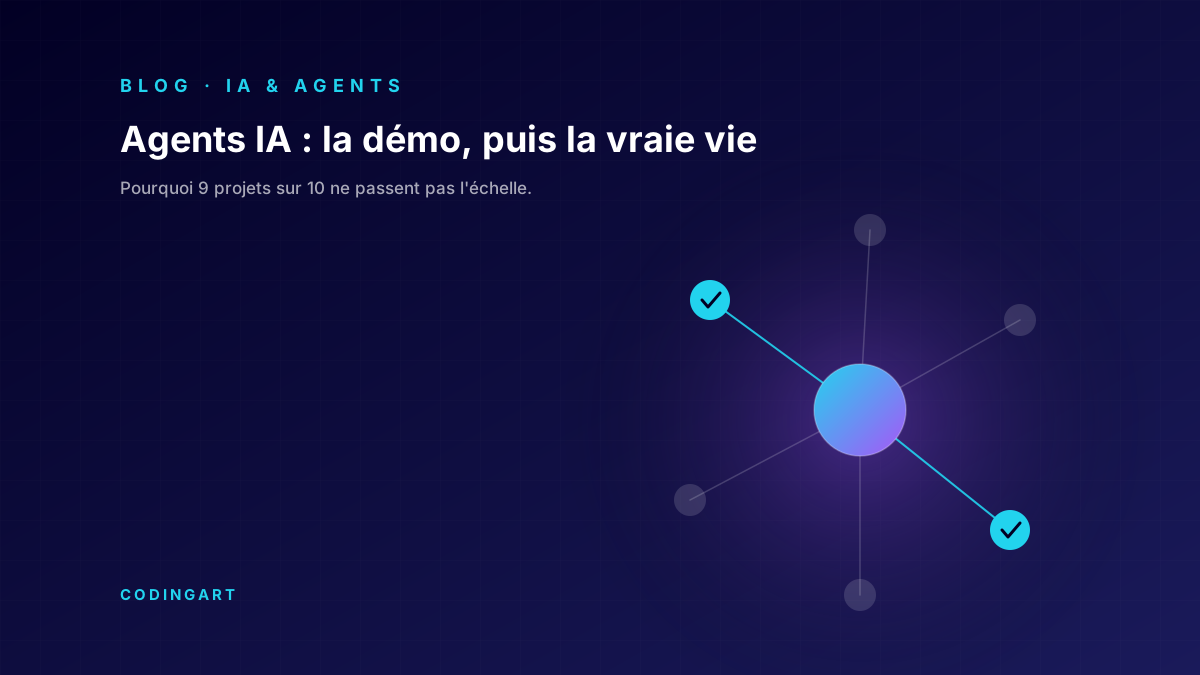
On the ground, things are much quieter. A 2026 report on the state of enterprise agents gives the number that actually matters. Roughly half of organizations already run an agent in production. Impressive, until you read the next line: fewer than one in ten has scaled it with value you can measure. The rest live in pilots, in demos, in a permanent “we're still testing.”
Gartner expects more than 40% of agentic AI projects to be scrapped by 2027. The cause is rarely the technology. It comes down to fuzzy returns on investment and guardrails that are too weak.
Two stories we see every week
First one: a team wires a model onto a nice use case, runs a demo that dazzles the leadership committee, and six months later nothing is left. Nobody actually owned the thing, nobody was measuring anything, and one unhappy customer was enough to pull the plug.
The second is less spectacular and works far better. You take one painful, repetitive task. Just one. Sorting incoming emails. Summarizing tenders. Drafting a standard reply that a human reviews before it goes out. You measure the time saved, you keep a person in the loop, and you let the agent grow only once it has proven itself on the small scope.
What sets the two apart has little to do with model power. The agents that hold up are almost always the least ambitious ones at the start.
Why it breaks in production, not in the demo
A language model gets things wrong with total confidence. It hands you a false answer in the same self-assured tone as a correct one. As long as the agent writes and suggests, that's fine, a human corrects it. The day you let it decide and act on its own, that confidence turns into a liability. This is where most projects stall. The demo runs smoothly; production is where it comes apart.
The use cases that dominate 2026 confirm it. At the top, document search and synthesis. Then productivity support, then customer service. Nothing magical here. Office work, sped up, with someone keeping a hand on the wheel.
A word for Europe
Since August 2, 2026, the European Commission can actually impose penalties under the general-purpose model provisions of the AI Act. The obligations already existed; now there are fines behind them. If your agent handles data from European customers, this is no longer a legal detail to sort out “later.”
So how do you start
Pick a task your teams hate doing, put a real number against it (hours per week, errors avoided), keep a human in control, and only talk about scale once that first number holds for two months straight. It sells less well than an autonomous agent running your entire company. It is also the only version still standing eighteen months from now.
Tags