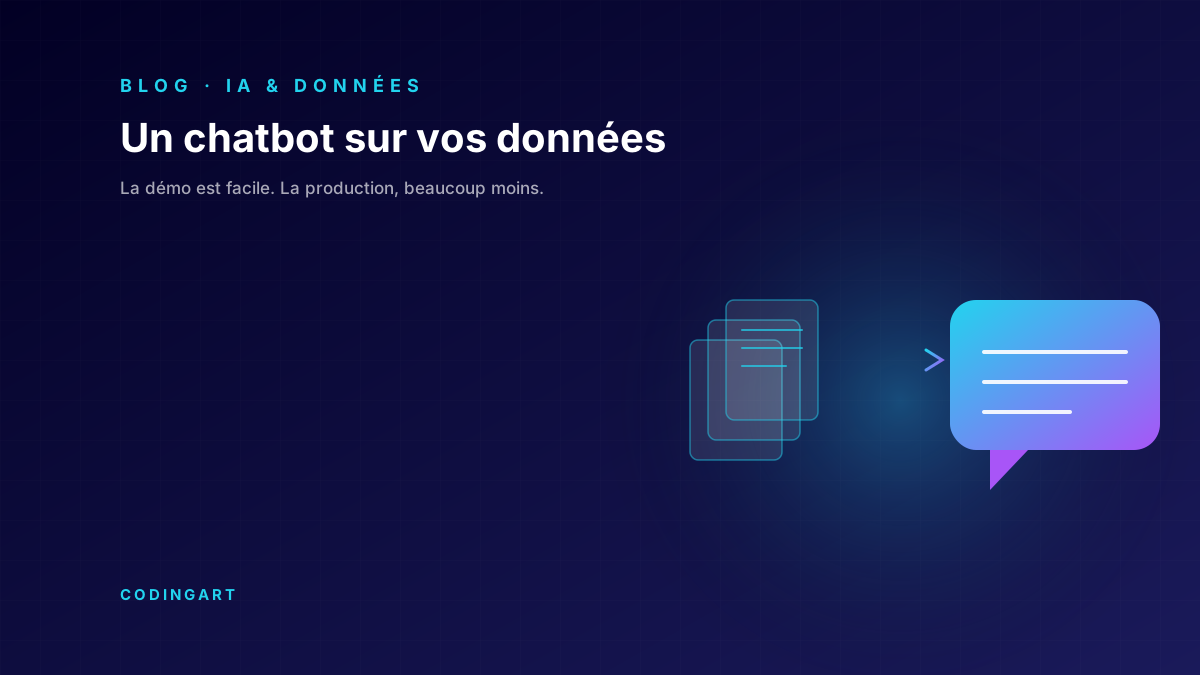
Everyone wants the chatbot that knows the company inside out. You feed it the PDFs, the procedures, the catalog, and it answers customers and staff alike. The demo comes together over a weekend. It's genuinely impressive, and that is exactly where the trap sits.
Here's the catch: a poorly built chatbot answers wrong with the same confidence as a well-built one. Nobody notices the gap until a customer gets hit with a wrong answer.
What Breaks in Production Is Never the Model
The systems that fail almost all fail in the same places: access to fresh data, how complete the retrieval is, and permissions above everything else. A chatbot that can surface a document an employee has no clearance to read is a data leak, plain and simple. The people who do this for a living say it well: skip governance, access control, and metadata before retrieval, and you end up with a system that is confident and unreliable.
The other half of the job is source quality. Wire an AI up to documents that are rough drafts, contradictory, or out of date, and you've built a machine that spreads mistakes faster. The model doesn't invent the mess. It recites it.
The RAG market, the tech behind these chatbots, is worth close to $2 billion in 2026. This is no passing fad. But the budget on a project goes into the engineering around the model far more than the model itself: cleaning the data, handling permissions, measuring the answers.
What Actually Works
Start with a single clean corpus with clear boundaries. Put permissions in on day one, not 'later.' Test with the real questions your teams ask, not three cherry-picked examples. And on sensitive topics, a human reads it over before anything goes out.
A useful chatbot is one you can believe. Everything else is just a demo.
Tags